Historical
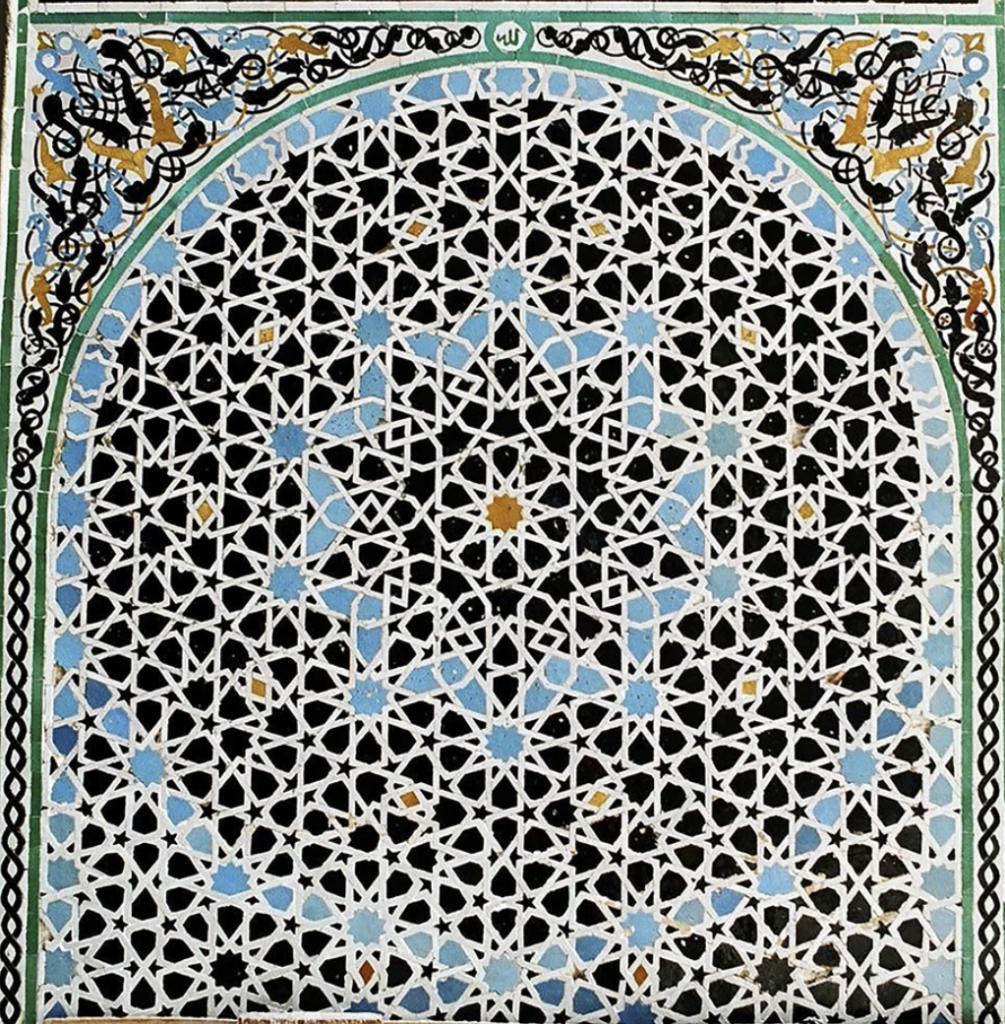
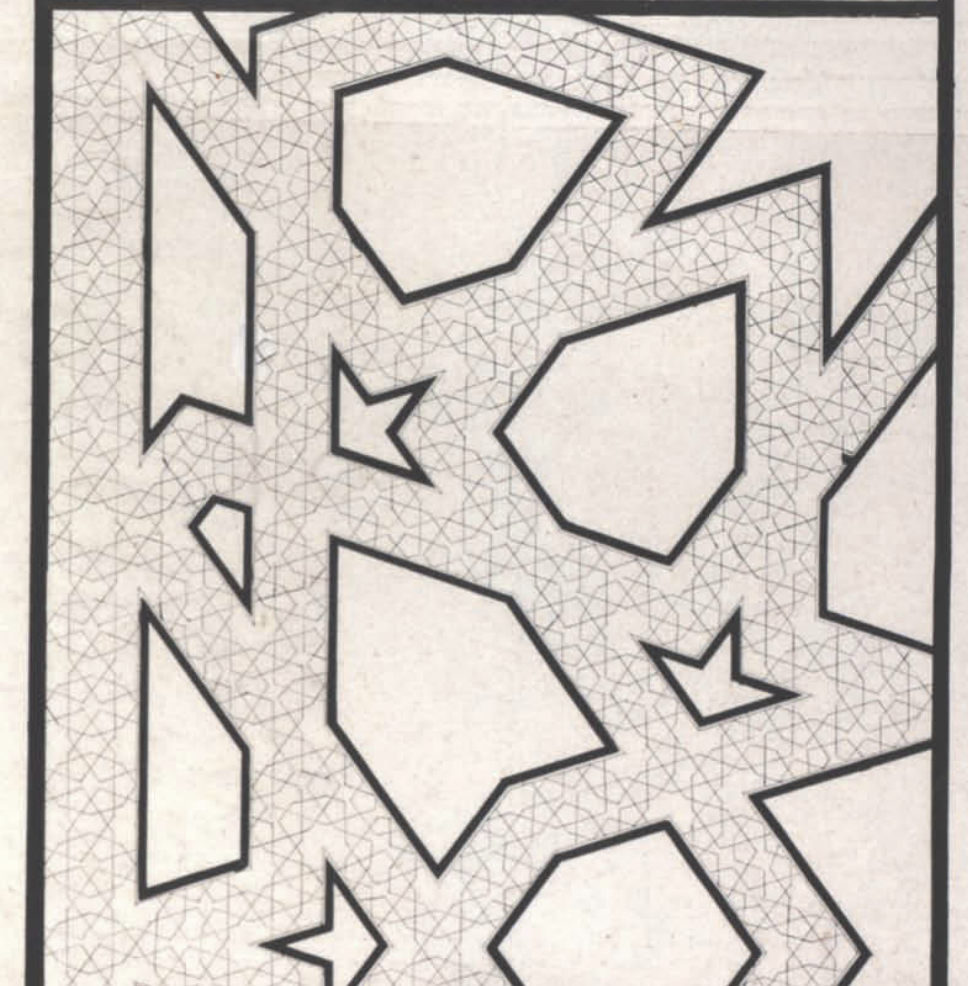
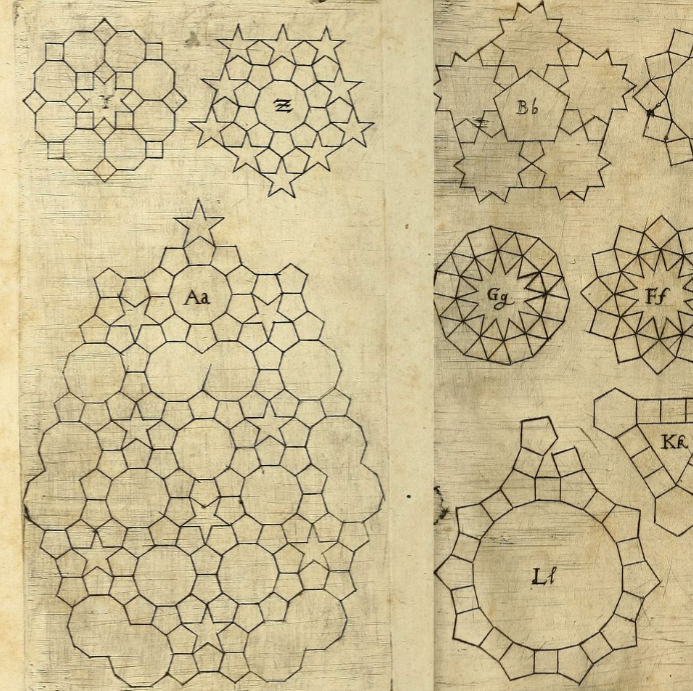
Quasicrystals are found in the historical record since the 12th century, where Medieval geometers introduced 10-fold tilings with long-range, aperiodic order. By filling geometric patterns with finer meshes of the same pattern, ancient craftsmen defined subdivision rules enabling the inflation/deflation of the pattern to any size.
These geometries closely mirrored the conversations occurring within the walls they decorated; in the 12th century, Persian Sufism had developed a contemplative theology in which the perception of unity within apparent multiplicity was a central spiritual practice. The great Sufi poet Rumi (1207–1273 ce) wrote extensively about the divine unity hidden within the apparent diversity of forms.
A quasiperiodic tiling is, from a contemplative standpoint, an advanced material object for this practice. It presents the viewer with a surface that appears endlessly varied — no two regions are identical, the eye dances with no repeating unit to grasp onto — yet the entire surface is generated by a simple set of rules operating from a single center. Unity producing infinite diversity without repetition. The pattern is, in the Sufi technical vocabulary, a mazhar (a place of manifestation) of the divine attribute of al-Ahad (the One) expressing itself through al-Kathir (the Many).
Quasicrystals again appear as a brief note in Johann Kepler’s Harmonices Mundi; this drawing later inspired Sir Roger Penrose to rediscover the quasicrystal and reduce the number of necessary unique tiles from five, established by the Persians, to two.
Examples
- Lu, P. J., & Steinhardt, P. J. (2007). Decagonal and quasi-crystalline tilings in medieval Islamic architecture. Science, 315(5815), 1106–1110. doi.org/10.1126/science.1135491
- Necipoğlu, G. (1996). The Topkapı scroll: geometry and ornament in Islamic architecture (J. Bloomfield, T. F. Reese, & S. Settis (eds.)). The Getty Center for the History of Art and the Humanities.
- Kepler, J. (1619). Harmonices Mundi. (Seen in figure Aa, pg. 58)
- Penrose, R. (1979). Pentaplexity: A Class of Non-Periodic Tilings of the Plane. The Mathemetical Intelligencer, 2(39), 32–37. doi.org/10.1007/BF03024384
Metals
Quasicrystals were first discovered in atomic matter while studying metallic glasses formed under high temperatures and pressures. When prepared this way, many blends of metals were known to organize atoms into local icosahedra, yet maintain a globally disordered material akin to a liquid. Within certain samples, small grains were discovered to posses five-fold symmetric electron diffraction patterns indicative of a material with atomically precise long-range order, akin to a crystal.
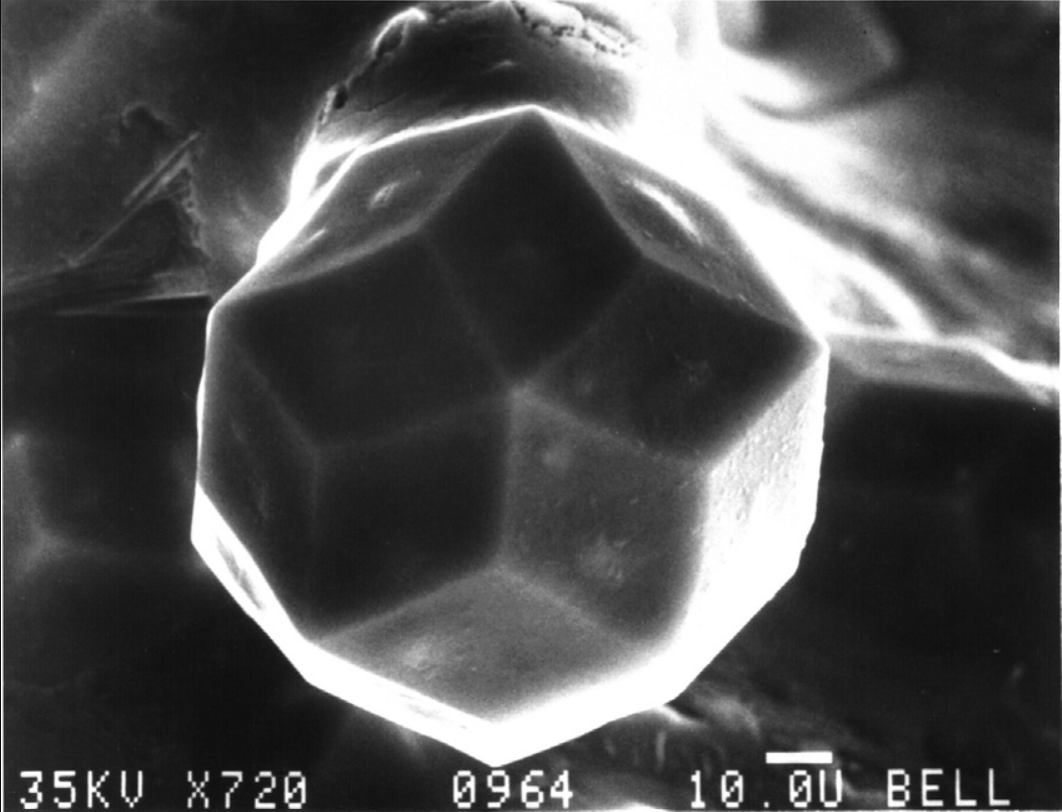
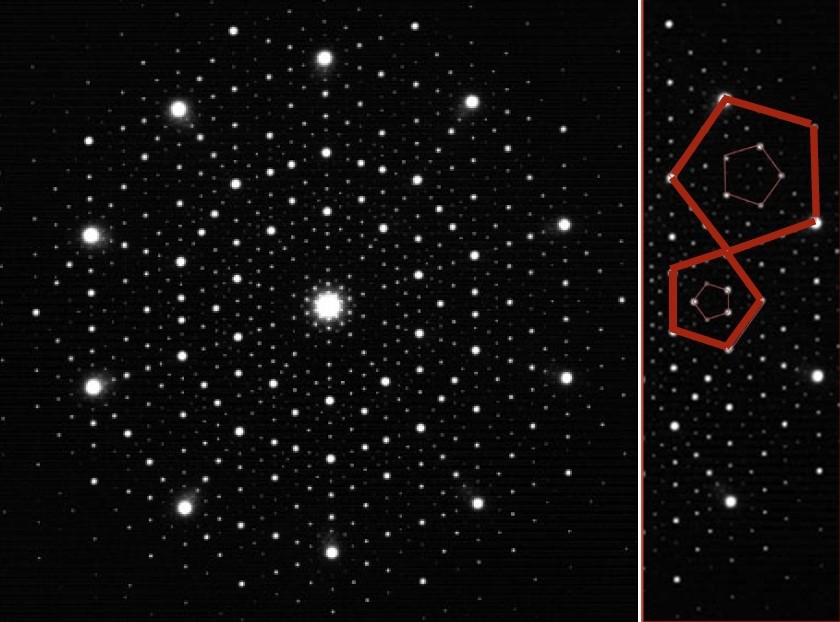
As it was then well-known icosahedra could not form a crystal lattice, the reality of such a sample was hotly contested. The possible crystal tiling groups were famously solved by August Bravais in 1850, who formally proved only patterns with 2, 3, 4, or 6-fold symmetry could tile the plane, and therefore grow into a crystal of indefinite size. Icosahedra, with 6 distinctive 5-fold symmetry axes, were known to be incapable to grow into crystals of their own form due to violations of translational symmetry.
Quite fortunately, in the same span of weeks a nearby group realized the potential for an icosahedral quasicrystal matching the demonstrated results; in short time the groups met and redefined the field of crystallography. It was then recognized that atomic materials may have long-range order without requiring translational symmetry.
Examples
- Shechtman, D., Blech, I., Gratias, D., & Cahn, J. W. (1984). Metalic phase with long-range orientational order and no translational symmetry. Physical Review Letters, 53, 1951-1954.
- Levine, D., & Steinhardt, P. J. (1984). Quasicrystals: A new class of ordered structures. Physical Review Letters, 53(26), 2477–2480. doi.org/10.1103/PhysRevLett.53.2477
The first natural quasicrystal was found nearly three decades later, as microscopic grains within a metallic asteroid that had formed in the early solar system and undergone a high-energy collision ~600 million years ago. The authors first discovered icosahedral quasicrystals within the asteroid, similar to the initial experiments of the field, with later discovery of decagonal quasicrystal grains as well.
Quasicrystals were seen again in slag formed by the 1945 Trinity atomic bomb test, marking an early accidental synthesis of the material. This slag, known as trinitite, is a red glass formed from melted desert sand and copper transmission wires slung around the test tower at the epicenter of the blast. Microscopic grains within the slag were found to be icosahedral quasicrystals, formed by a previously unrealized blend of metals.
Examples
- Bindi, L., Steinhardt, P. J., Yao, N., & Lu, P. J. (2009). Natural quasicrystals. Science, 324(5932), 1306–1309. doi.org/10.1126/science.1170827
- Bindi, L., Kolb, W., Nelson Eby, G., Asimow, P. D., Wallace, T. C., & Steinhardt, P. J. (2021). Accidental synthesis of a previously unknown quasicrystal in the first atomic bomb test. PNAS, 118(22), 1–5. doi.org/10.1073/PNAS.2101350118
Optical
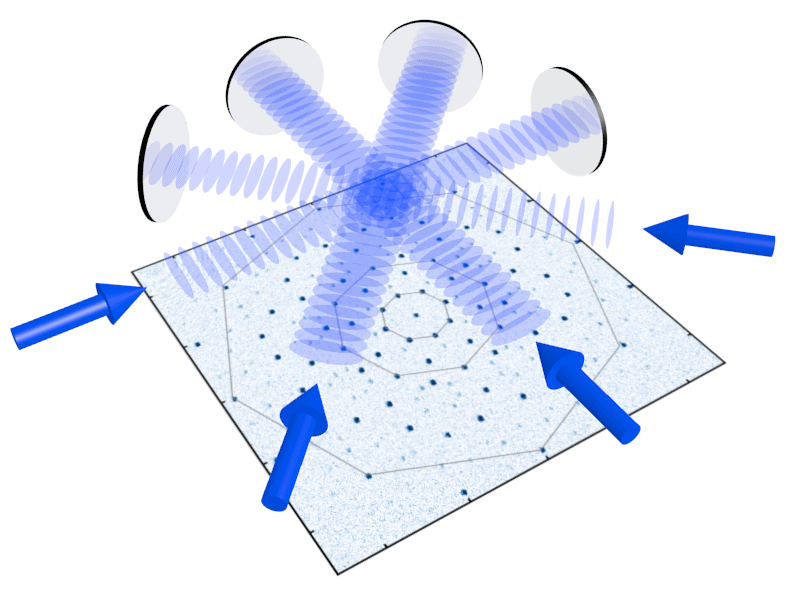
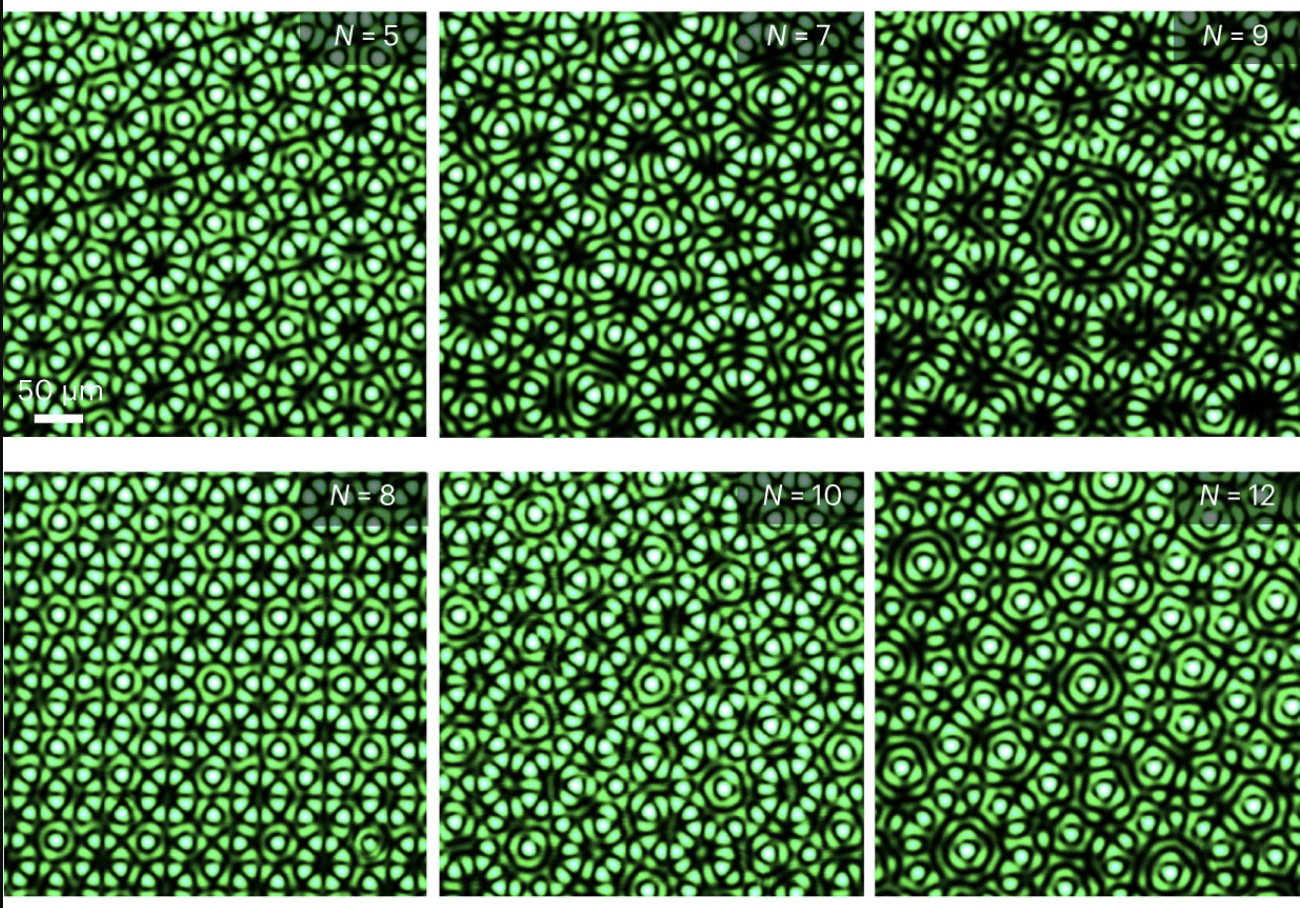
Quasicrystals are formed in the interference patterns of plane waves when non-crystalline symmetries are equally rotated around a center. Formed of near-perfect plane waves, laser light may be manipulated to form optical quasicrystals. Minute changes in the lasers, lenses and mirrors of the setup may be used to send various vortices and waves through the photon lattice, allowing the study of exotic quasi-particles.
Examples
- Guidoni, L., Triché, C., Verkerk, P., & Grynberg, G. (1997). Quasiperiodic optical lattices. Physical Review Letters, 79(18), 3363–3366. doi.org/10.1103/PhysRevLett.79.3363
- Freedman, B., Bartal, G., Segev, M., Lifshitz, R., Christodoulides, D. N., & Fleischer, J. W. (2006). Wave and defect dynamics in nonlinear photonic quasicrystals. Nature, 440(7088), 1166–1169. doi.org/10.1038/nature04722
- Viebahn, K., Sbroscia, M., Carter, E., Yu, J. C., & Schneider, U. (2019). Matter-Wave Diffraction from a Quasicrystalline Optical Lattice. Physical Review Letters, 122(11), 110404. doi.org/10.1103/PhysRevLett.122.110404
- Wang, P., Fu, Q., Konotop, V. V., Kartashov, Y. V., & Ye, F. (2024). Observation of localization of light in linear photonic quasicrystals with diverse rotational symmetries. Nature Photonics, 18(3), 224–229. doi.org/10.1038/s41566-023-01350-6
Quantum
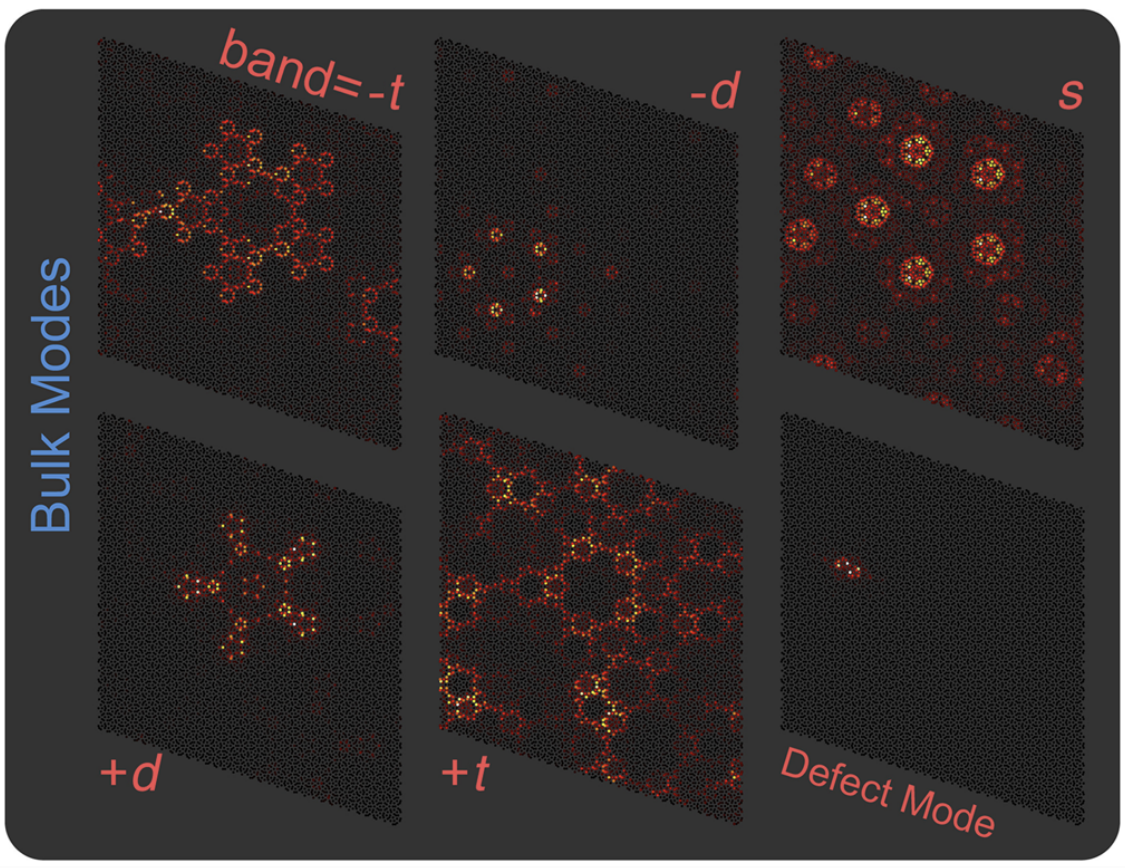
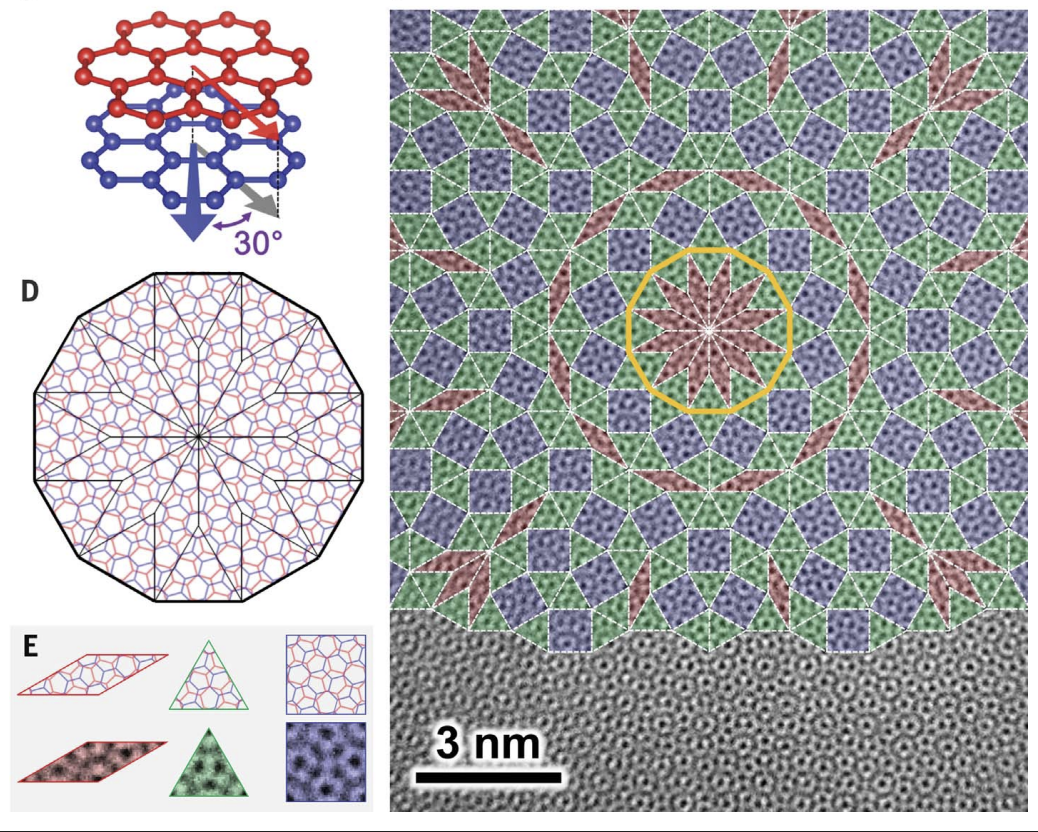
Quantum quasicrystals have been experimentally realized by suspending cooled particles within the waves of optical quasicrystals. Beyond optical lattices, when a graphene bilayer is twisted by precisely 30° a 2D dodecagonal quasicrystal forms. Quantum excitations hosted in either of these frameworks delocalize energy across the material in fractals, showing partial localization in geometric patterns spread across the lattice.
Examples
- Sanchez-Palencia, L., & Santos, L. (2005). Bose-Einstein condensates in optical quasicrystal lattices. Physical Review A, 72, 053607. doi.org/10.1103/PhysRevA.72.053607
- Bandres, M. A., Rechtsman, M. C., & Segev, M. (2016). Topological Photonic Quasicrystals: Fractal Topological Spectrum and Protected Transport. Physical Review X, 6, 011016.
- Ahn, S. J., Moon, P., Kim, T., & Kim, H. (2018). Dirac electrons in a dodecagonal graphene quasicrystal. Science, 361, 782–786.
- Fang, F., Paduroiu, S., Hammock, D., & Irwin, K. (2020). Empires: The Nonlocal Properties of Quasicrystals. Electron Crystallography, doi.org/10.5772/intechopen.90237
- Mivehvar, F., Ritsch, H., & Piazza, F. (2019). Emergent Quasicrystalline Symmetry in Light-Induced Quantum Phase Transitions. Physical Review Letters, 123(21), 210604. doi.org/10.1103/PhysRevLett.123.210604
Quasicrystals share key mathematical formulations with many quantum error correcting codes. When formed into a closed torus, the topology of a well prepared quasicrystalline material may protect quantum states. Such materials are an open path to long-lasting memory in quantum computers.
Examples
- Li, Z., & Boyle, L. (2023). The Penrose Tiling is a Quantum Error-Correcting Code. arxiv.org/abs/2311.13040
- Amaral, M., Chester, D., Fang, F., & Irwin, K. (2022). Exploiting Anyonic Behavior of Quasicrystals for Topological Quantum Computing. Symmetry, 14(9), 1780. doi.org/10.3390/sym14091780
Water
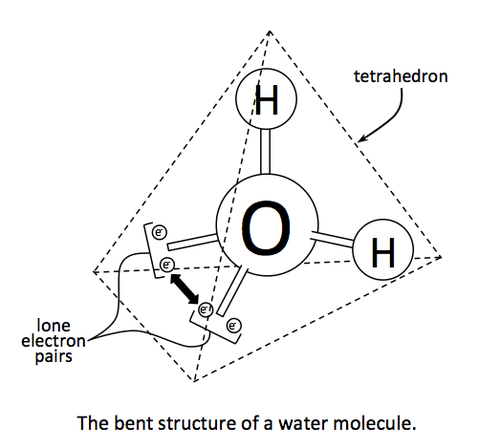
Individual water molecules closely approximate the Platonic tetrahedron; the oxygen resides at the center, with hydrogen atoms at two points and electron pairs at the remaining two. Densely packed tetrahedra tend to form regions with local icosahedral order and have known quasicrystal phases, opening the possibility for a quasicrystal made of water.
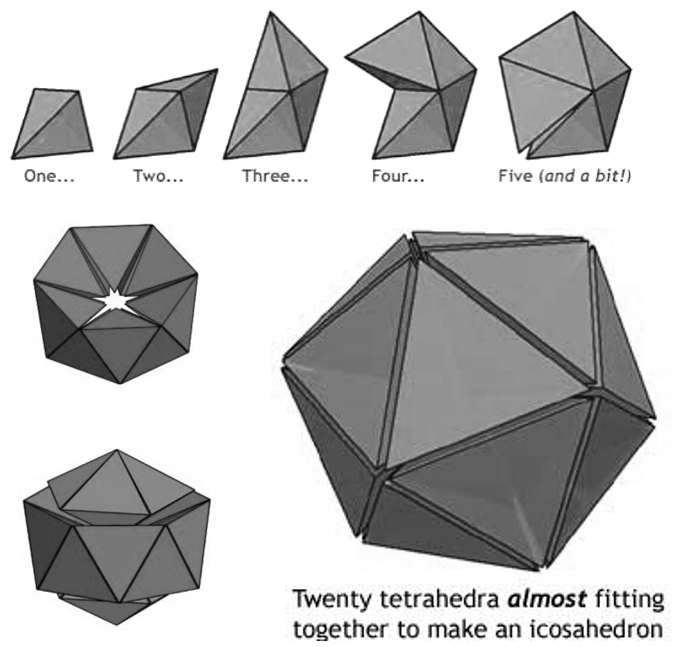
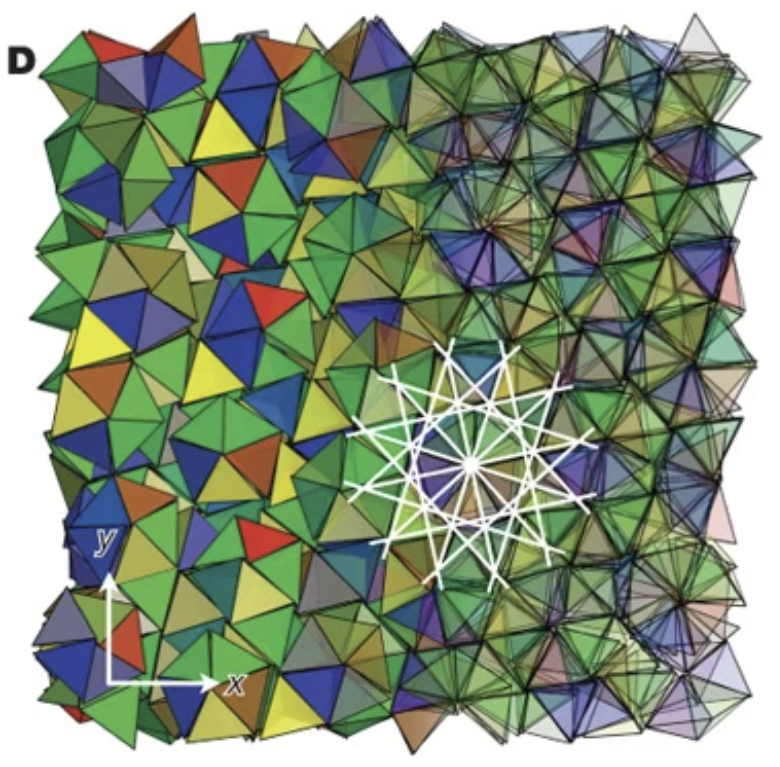
It is noted that Plato historically denoted the icosahedron as the Platonic solid representing water, due to their shared ability to flow and the commonality of five-fold symmetries in water-based life.
Examples (tetrahedral packings)
- Dmitrienko, V. E., & Kléman, M. (2001). Tetrahedral structures with icosahedral order and their relation to quasicrystals. Crystallography Reports, 46(4), 527–533. doi.org/10.1134/1.1387118
- Haji-Akbari, A., Engel, M., Keys, A. S., Zheng, X., Petschek, R. G., Palffy-Muhoray, P., & Glotzer, S. C. (2009). Disordered, quasicrystalline and crystalline phases of densely packed tetrahedra. Nature, 462(7274), 773–777. doi.org/10.1038/nature08641
- Fang, F., Kovacs, J., Sadler, G., & Irwin, K. (2014). An icosahedral quasicrystal as a packing of regular tetrahedra. Acta Physica Polonica A, 126(2), 458–460. doi.org/10.12693/APhysPolA.126.458
- Engel, M., Damasceno, P. F., Phillips, C. L., & Glotzer, S. C. (2015). Computational self-assembly of a one-component icosahedral quasicrystal. Nature Materials, 14(1), 109–116. //doi.org/10.1038/nmat4152
Several models for water based quasicrystals have emerged, and computational studies have suggested some forms may be stable under nanoconfinement. Certain models of liquid water suggest icosahedral clusters are constantly forming and dissolving, wherein ephemeral nanoscale quasicrystals would exist in most liquid water.
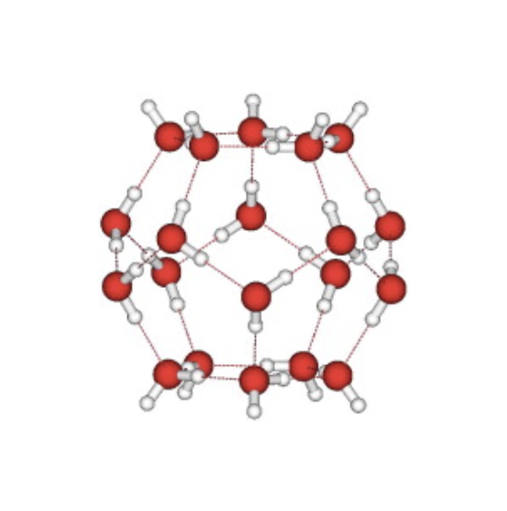
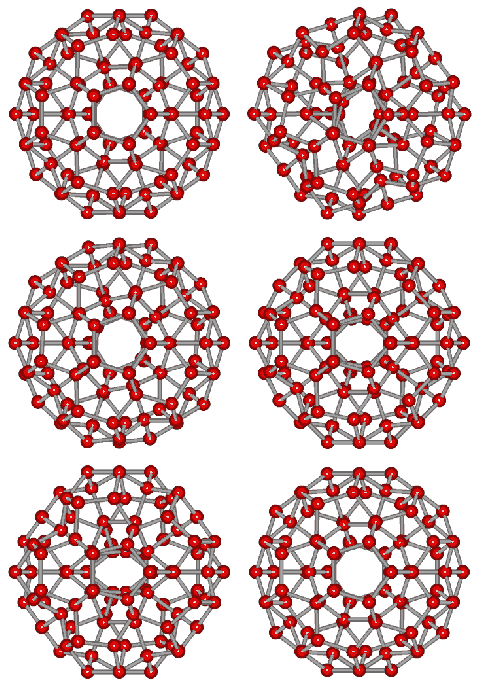
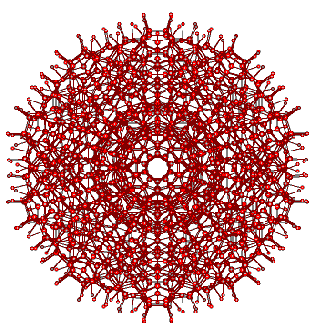
Known phases of water that closely approximate its theoretical quasicrystal form include the amorphous ices and supercooled water, closely related phases where molecules adopt local icosahedral order in a glass-like matrix. Water is also know to adopt similar phases in the clathrate hydrates, which mix in other small molecules to form local patches of an icosahedral quasicrystal repeated en masse in a standard crystalline lattice.
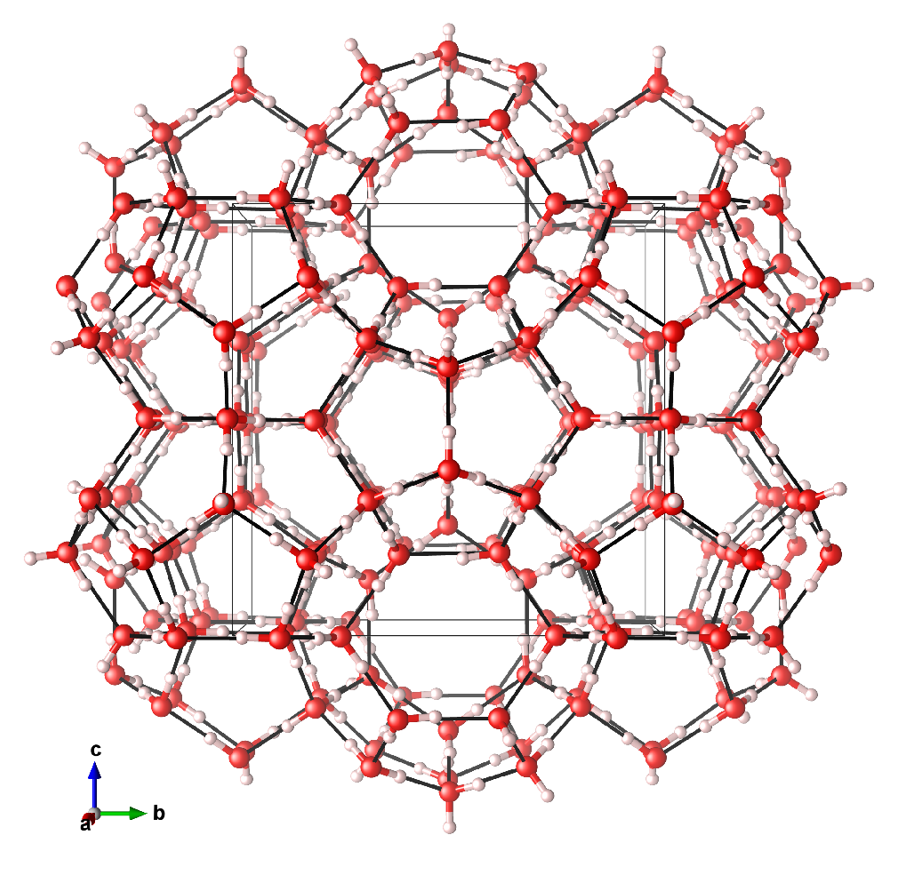
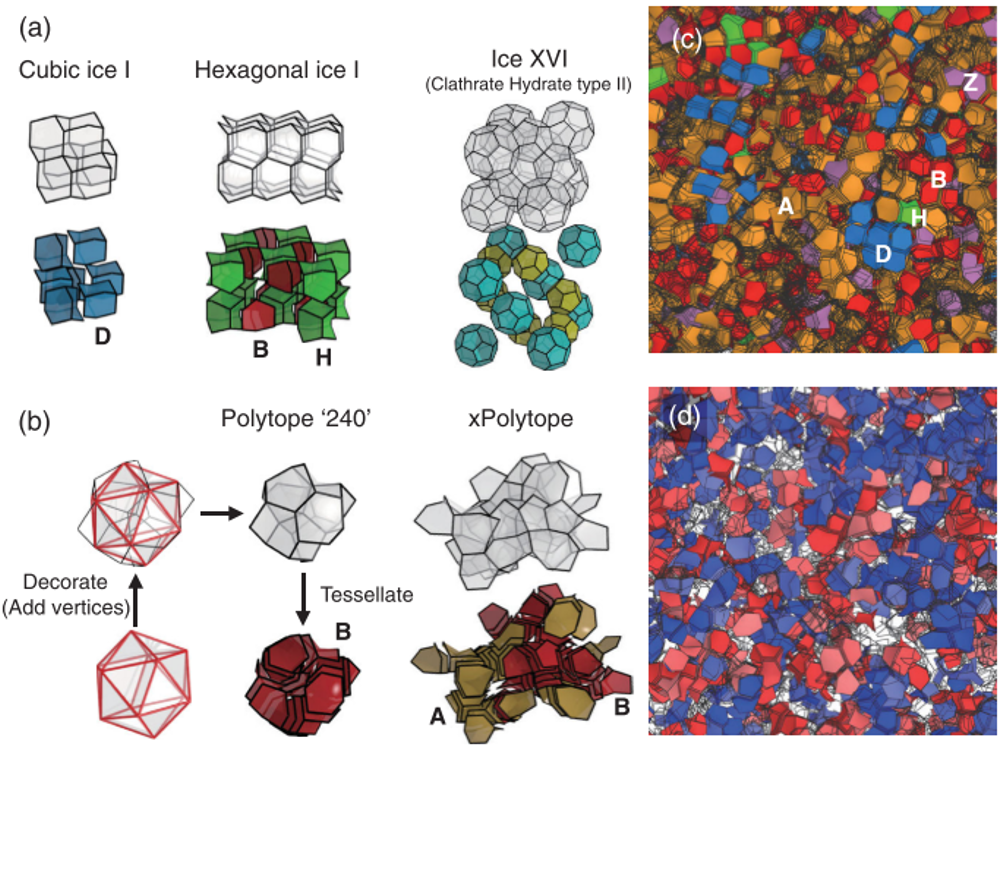
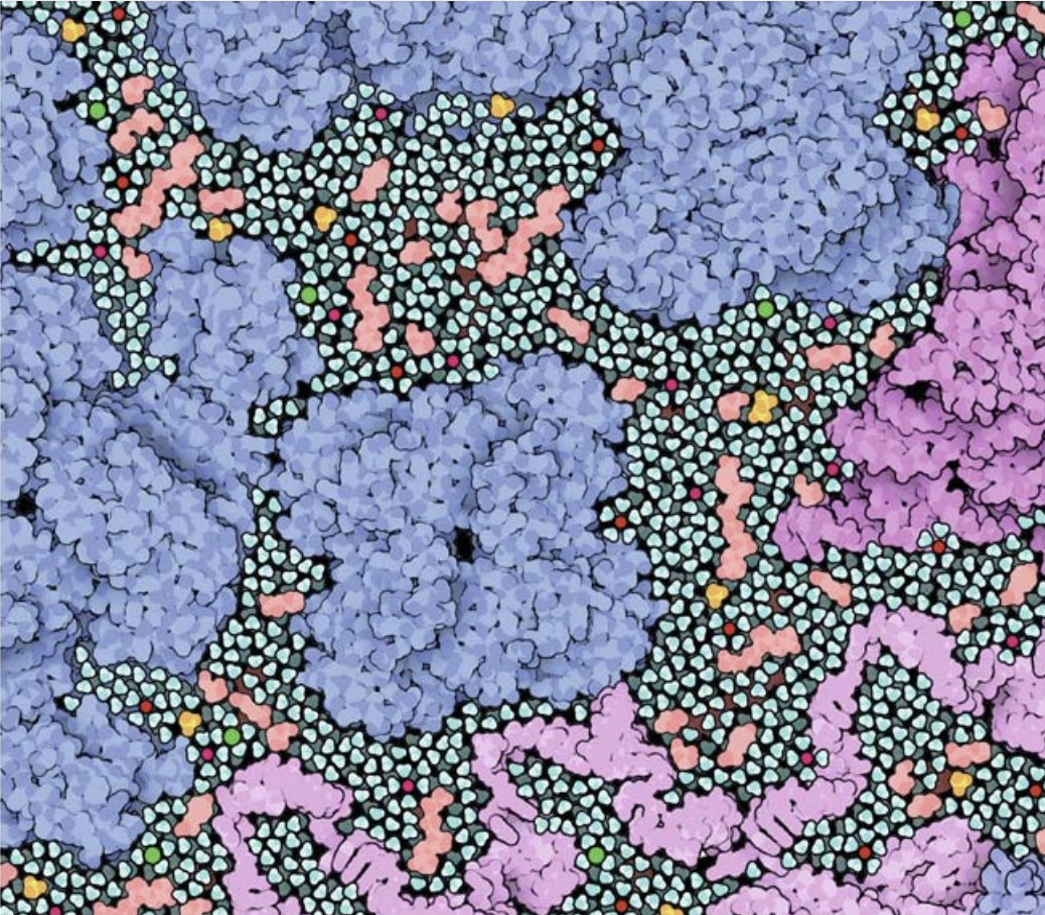
Cytoplasmic water is known to exist in nanoconfined gaps, forms clathrate cages around many common cellular solutes, and is closely related to the amorphous ices and supercooled water. For these reasons, the water within our cells is a close approximant of the icosahedral quasicrystal.
Examples (H2O)
- Mertz, J. E. (1988). A model for quasiperiodic solid water.
- Chaplin, M. F. (1999). A proposal for the structuring of water. Biophysical Chemistry, 83, 211–221.
- Johnston, J. C., Kastelowitz, N., & Molinero, V. (2010). Liquid to quasicrystal transition in bilayer water. Journal of Chemical Physics, 133(15). doi.org/10.1063/1.3499323
- Matsumoto, M., Yagasaki, T., & Tanaka, H. (2015). Chiral Ordering in Supercooled Liquid Water and Amorphous Ice. Physical Review Letters, 115(19), 1–5. doi.org/10.1103/PhysRevLett.115.197801
Biological
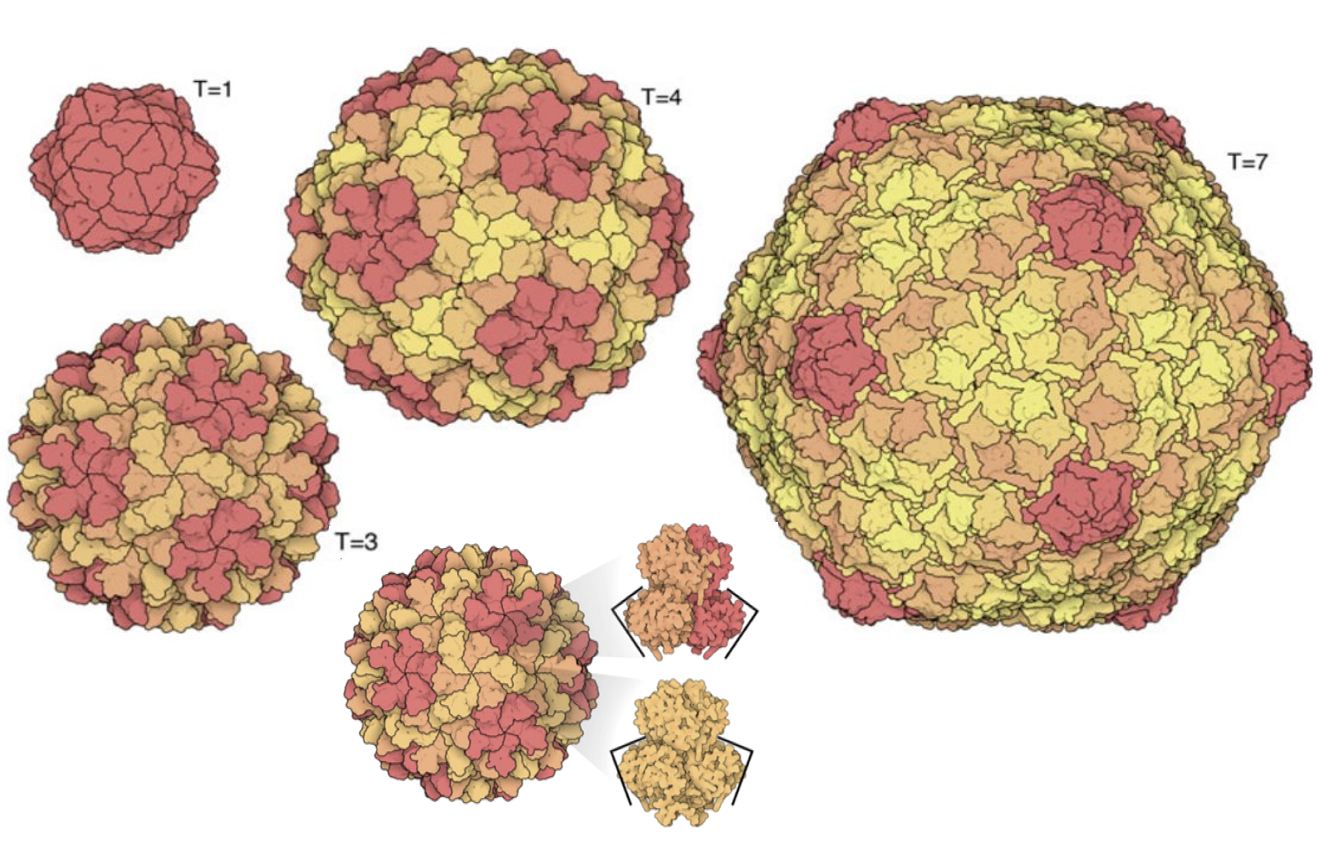
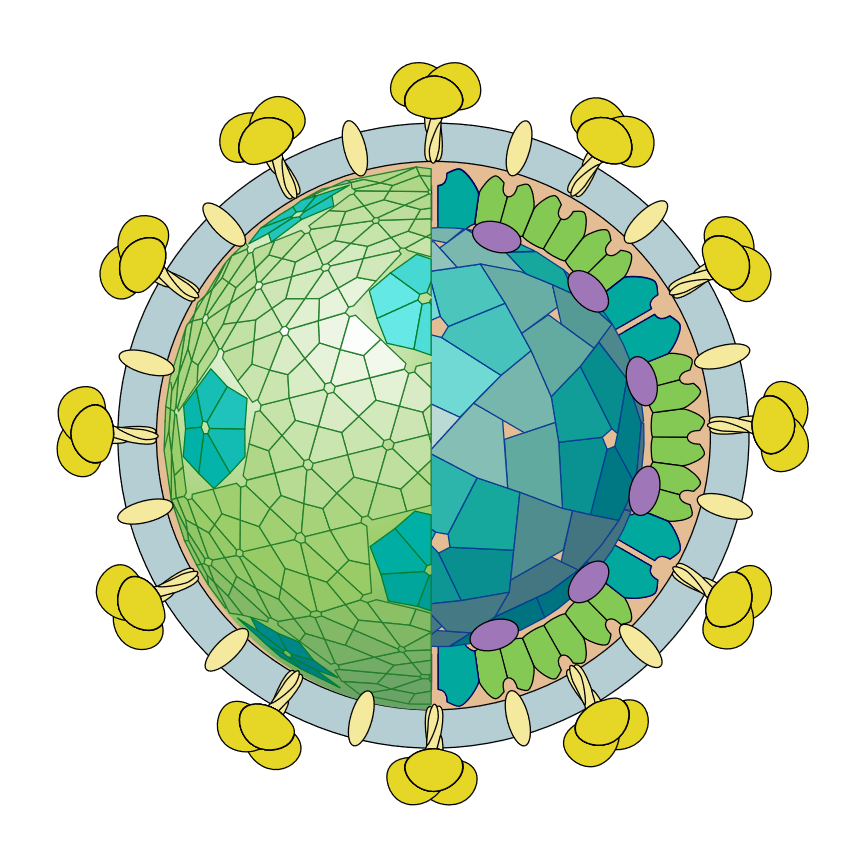
Many viruses form icosahedral protein shells. A single protein adopts slightly different conformations to form trigonal, pentagonal, and hexagonal local groups that together tile the surface of the icosahedron. Many tiling techniques are used among distantly related icosahedral viruses, which span from minimal 17 nanometer RNA viruses encoding only the aforementioned protein and a replicating RNA, to 500 nanometer giant DNA viruses with similar cytoskeletal proteins and genetic transcription machinery to ourselves.
Examples
- Konevtsova, O. V, Lorman, V. L., & Rochal, S. B. (2015). Structures of Spherical Viral Capsids as Quasicrystalline Tilings. Physics of the Solid State, 57(4), 810–814. doi.org/10.1134/S1063783415040125
- Rochal, S. B., Roshal, A. S., Konevtsova, O. V., & Podgornik, R. (2024). Proteinaceous Nanoshells with Quasicrystalline Local Order. Physical Review X, 14(3), 31019. doi.org/10.1103/PhysRevX.14.031019
- Konevtsova, O. V., Rochal, S. B., & Lorman, V. L. (2012). Chiral quasicrystalline order and dodecahedral geometry in exceptional families of viruses. Physical Review Letters, 108(3). doi.org/10.1103/PhysRevLett.108.038102
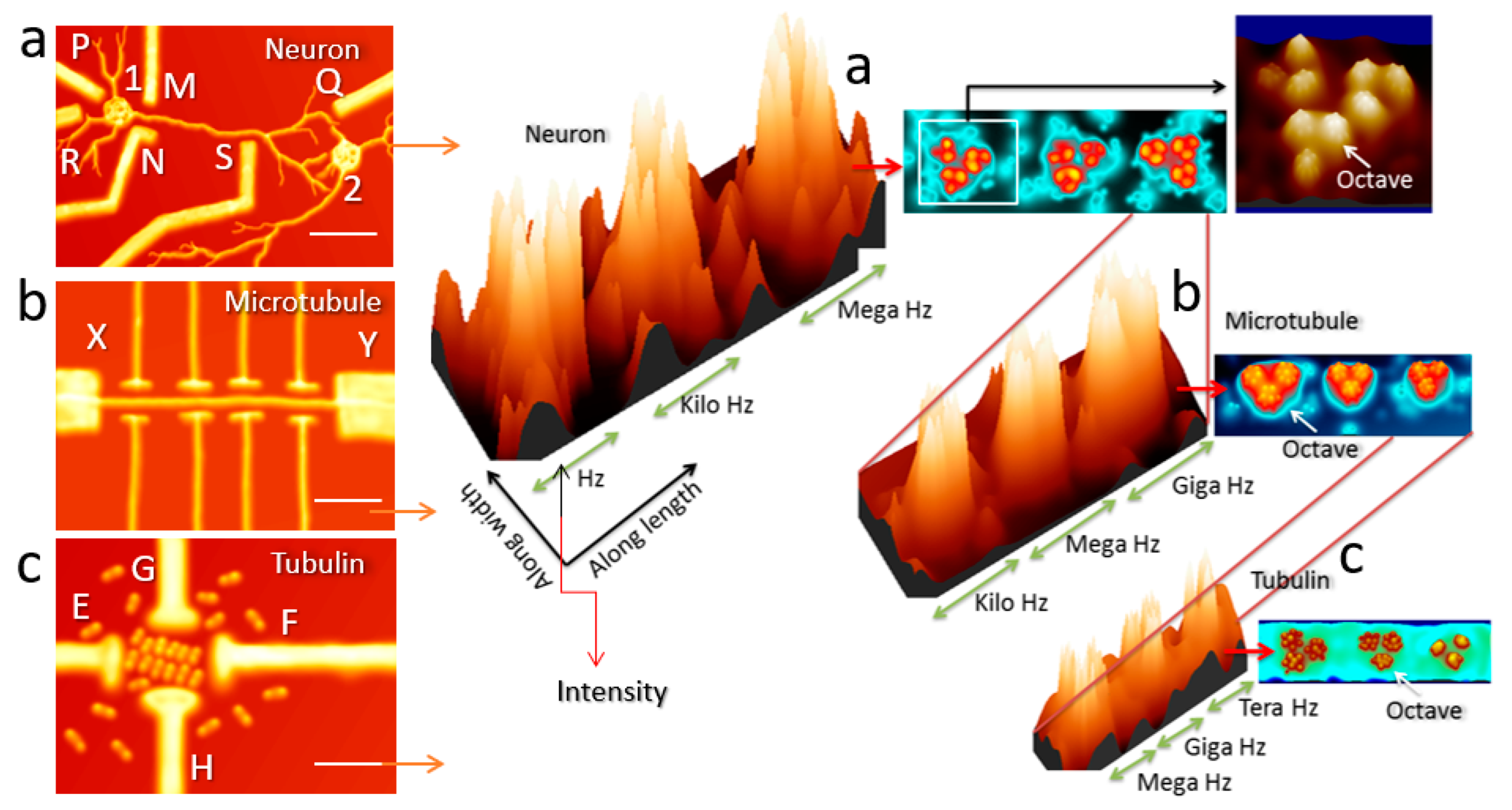
Quasicrystalline behavior can also be seen in the resonance spectrum of tubulin proteins. Self-similar, fractal electronic response has been recorded across the isolated proteins, assembled protein microtubules, and microtubule-rich cell cytoskeletons in neurons. This response is characterized by a 2D ‘triplet of triplets’ structure repeating across twelve orders of magnitude, from hertz to terahertz.
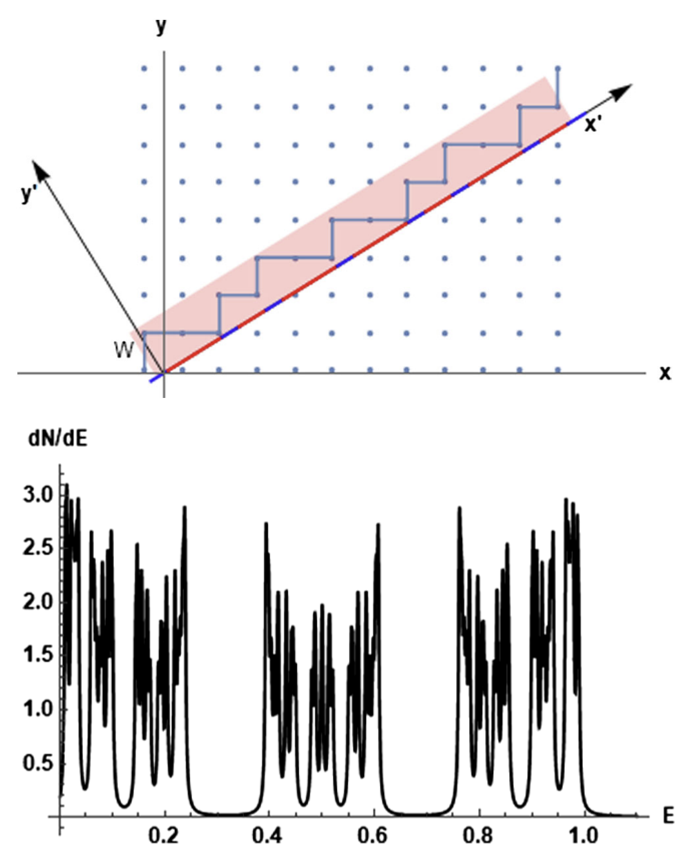
This electronic structure is closely related to the 1D Fibonacci quasicrystal, also known to have a multifractal energy spectra structured as a triplet of triplets. Here the three main groups are each composed of three groups, themselves each composed of three groups, continued ad infinitum.
Examples
- Saxena, K., Singh, P., Sahoo, P., Sahu, S., Ghosh, S., Ray, K., Fujita, D., & Bandyopadhyay, A. (2020). Fractal, scale free electromagnetic resonance of a single brain extracted microtubule nanowire, a single tubulin protein and a single neuron. Fractal and Fractional, 4, 1–16. doi.org/10.3390/fractalfract4020011
- Jagannathan, A. (2021). The Fibonacci quasicrystal: Case study of hidden dimensions and multifractality. Reviews of Modern Physics, 93(4), 45001. doi.org/10.1103/RevModPhys.93.045001
- Sadoc, J. F., & Rivier, N. (2000). Boerdijk-Coxeter helix and biological helices as quasicrystals. Materials Science and Engineering A, 294–296, 397–400. doi.org/10.1016/S0921-5093(00)01136-9
- Gardiner, J. (2012). Fibonacci, quasicrystals and the beauty of flowers. Plant Signaling and Behavior, 7(12), 1721–1723. doi.org/10.4161/psb.22417
- Amos, L. A., & Klug, A. (1974). Arrangement of subunits in flagellar microtubules. Journal of Cell Science, 14(3), 523–549. doi.org/10.1242/jcs.14.3.523