
Pilot Wave Mechanics
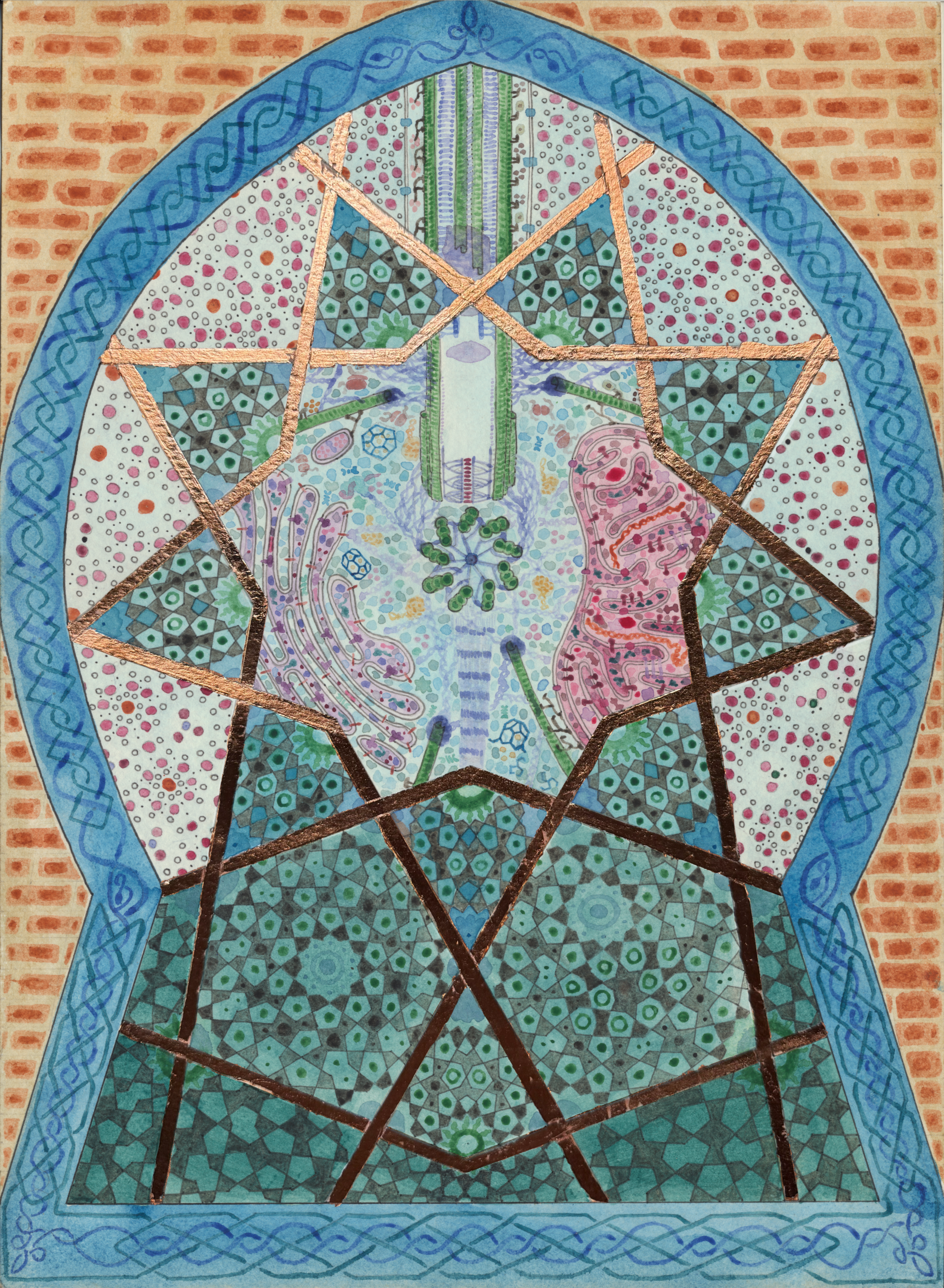
Originally presented by Louis de Broglie at the 1927 Solvay conference on quantum theory, early mathematical descriptions of non-local wavefields guiding elemental particles failed to convince many leading physicists that underlying dynamics could describe the quantized statistics they were recording. Yet, de Broglie’s received the Nobel Prize in physics only 2 years later for experiments on the electron that confirmed his theoretical extensions of wave-particle duality from light to matter. The dynamical theory was later placed on stronger theoretical ground by Einstein’s ‘spiritual son’ David Bohm, gaining acceptance as a consistent interpretation of the experimental results of quantum theory. With the advent of computers, Bohm was able to calculate and display particle trajectories that recreated the experimental results of the double slit experiment, publicized in the work of John S. Bell.
Examples
- de Broglie, Louis (1929). The Wave Nature of the Electron. Nobel Lecture.
- Bohm, D. (1952). A Suggested Interpretation of the Quantum Theory in Terms of “Hidden” Variables. I. Physical Review, 85(2), 166–179.
- Bohm, D. (1952). A Suggested Interpretation of the Quantum Theory in Terms of “Hidden” Variables. II. Physical Review, 85(2), 180–193.
- Bell, J. S. (1966). On the Problem of Hidden Variables in Quantum Physics. Reviews of Modern Physics, 38(3), 447–452.
- Bell, J. S. (1982). On the Impossible Pilot Wave. Foundations of Physics, 12(10), 989–999.
- Bohm, D. J., & Hiley, B. J. (1982). The de Broglie pilot wave theory and the further development of new insights arising out of it. Foundations of Physics, 12(10), 1001–1016. doi.org/10.1007/BF01889273
Later work by Yves Couder & Emmanuel Fort uncovered de Broglie’s predicted pilot wave dynamics at a classical scale within fluid mechanical studies of bouncing viscous droplets interacting with self-generated wavefields on the surface of a bath. In an oil bath (energized to slightly below the Faraday threshold where waves spontaneously emerge on the surface, as seen in the zero-point energy of the quantum vacuum) a droplet of the same oil bounces for long periods, generating waves on the surface each time it lands. Each time it falls it lands on these waves, being ‘piloted’ by their presence. The waves begin to carry memory of where the particle has been and interact with other matter in the bath, guiding it around the environment.
When the experiment is carefully prepared, the paths taken by the droplets follow those described in de Broglie’s equations. Such droplets have recreated the quantized and wave-like behavior of the doublet slit experiment, superposition states, tunneling through energy barriers, the dynamics of a particle in a well, and the electron probability densities of the hydrogen nucleus. These concepts have been deeply explored by John Bush (website). While these fluid mechanical studies are instructive to underlying dynamics, differences in the physical properties of the oil used and the quantum vacuum are thought to alter the range and temporal symmetry of sustained waves.
Examples
- Illustrative slides
- Fort, E., Eddi, A., Boudaoud, A., Moukhtar, J., & Couder, Y. (2010). Path-memory induced quantization of classical orbits. PNAS, 12(41), 17515–17520. doi.org/10.1073/pnas.1007386107/-/DCSupplemental
- Bush, J. W. M. (2015). Pilot-wave hydrodynamics. Annual Review of Fluid Mechanics, 47, 269–292. doi.org/10.1146/annurev-fluid-010814-014506
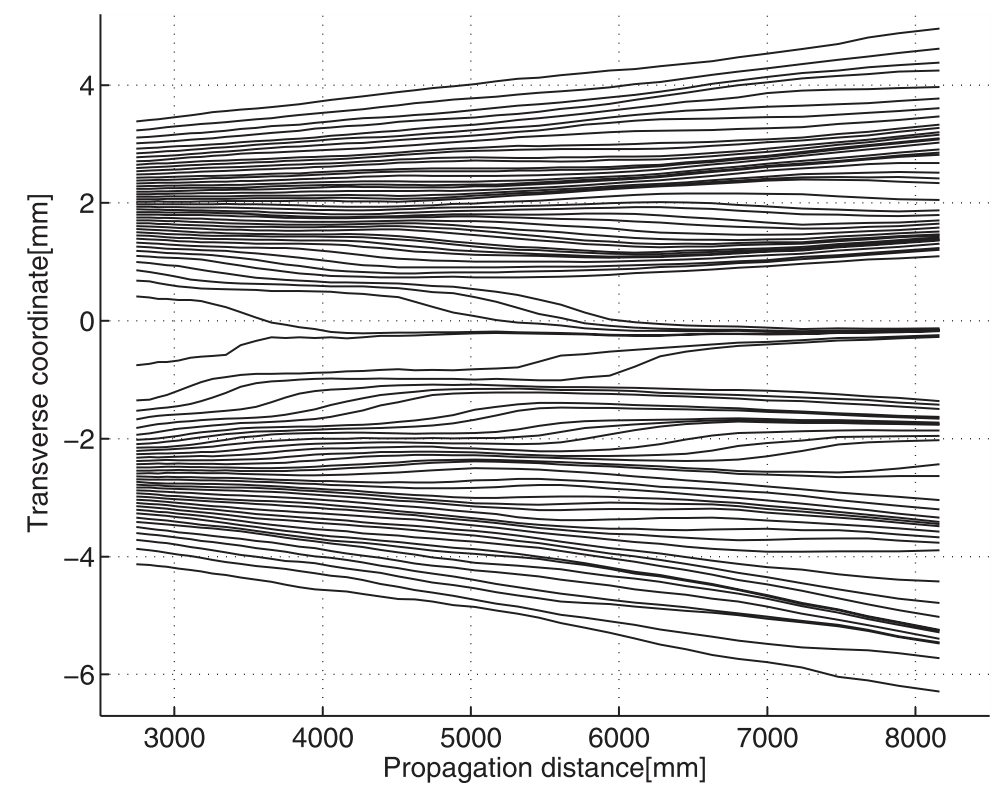
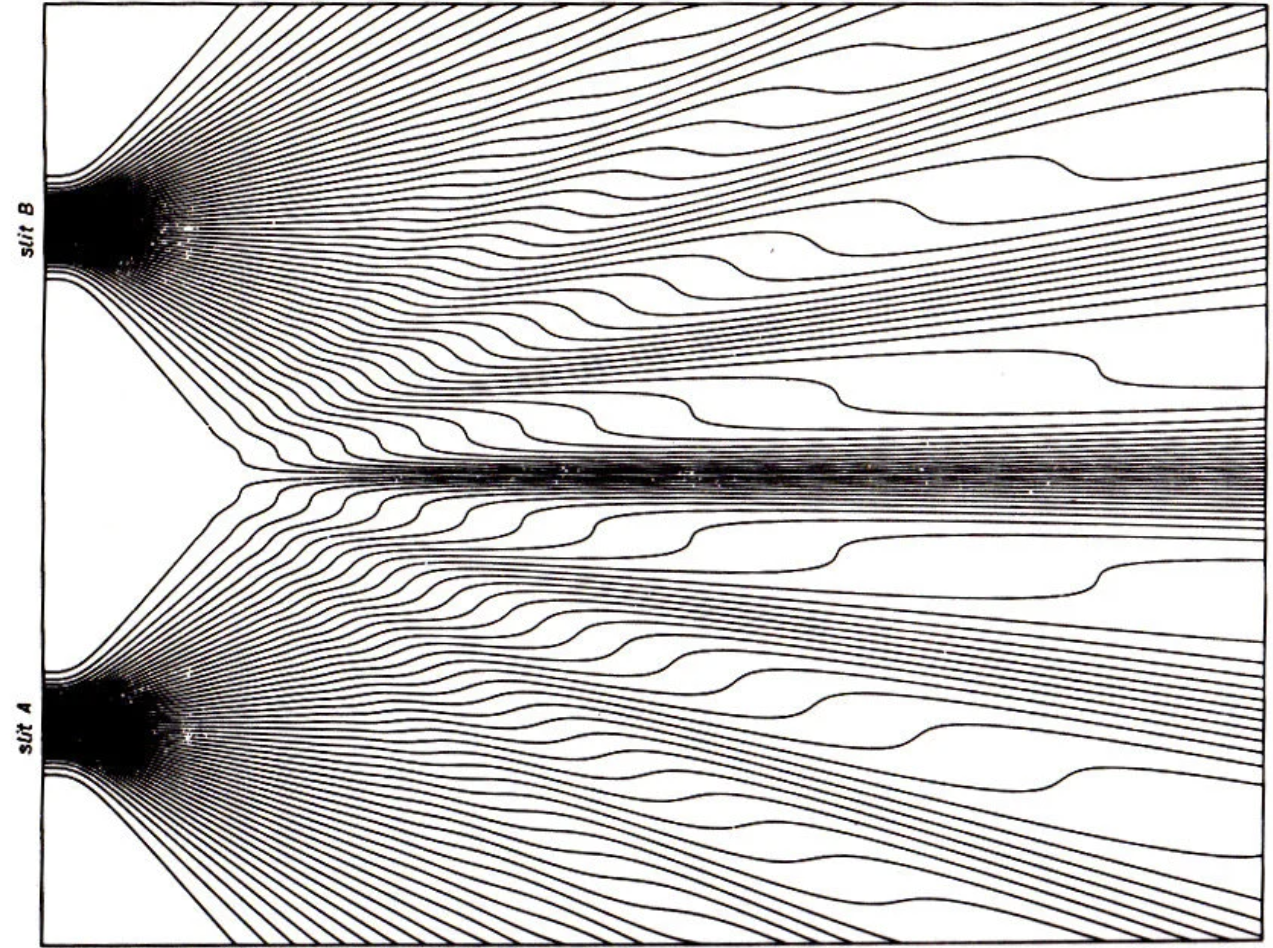
Heisenberg’s uncertainty principle was formerly believed to hinder the measurement of an elemental particle’s path across space, precluding the determination of underlying trajectories. The advent of weak measurement, the extraction of minimal information from a single entity, practiced on large numbers of identically prepared particles has surpassed this obstacle. It has now been seen that photons follow the paths seen in Bohm’s computations.
Examples
- Kocsis, S., Braverman, B., Ravets, S., Stevens, M. J., Mirin, R. P., Shalm, K. L., & Steinberg, A. M. (2011). Observing the average trajectories of single photons in a two-slit interferometer. Science, 332, 1170–1174.
- Danan, A., Farfurnik, D., Bar-Ad, S., & Vaidman, L. (2013). Asking photons where they have been. Physical Review Letters, 111, 240402. https://doi.org/10.1103/PhysRevLett.111.240402
Quantum Ontology
The terms “measurement” and “observer” contain many shifty assumptions. See the work of John S. Bell on this matter.
Examples
- Bell, J. S. (1973) Subject and object. CERN
- Bell, John S. (1990). Against Measurement. Physics World, 3(8), 33–40.
- Da, P. C. W., & Brown, J. R. (1986) The Ghost in the Atom: Interview with John Bell. Cambridge: Cambridge University Press.
- Bell, J. S. (1987). Speakable and Unspeakable in Quantum Mechanics: Collected Papers on Quantum Philosophy. Cambridge: Cambridge University Press.
Recent discoveries in quantum foundations demand an ontic wavefunction; that is, one whose dimensions exist directly in reality, such as in the fundamental properties of mass or charge. As a wavefunction for a system of N qubits requires on the order of 3N dimensions to fully describe, quantum mechanics requires a high-dimensional ontic substrate to adequately describe reality.
Examples
- Pusey, M. F., Barrett, J., & Rudolph, T. (2012). On the reality of the quantum state. Nature Physics, 8(6), 475–478. doi.org/10.1038/nphys2309
- Ringbauer, M., Duffus, B., Cavalcanti, E. G., White, A. G., & Fedrizzi, A. (2016). Measurements on the reality of the wavefunction. Nature Physics, 11, 249–254. doi.org/10.1038/NPHYS3233
Quantum Qualia
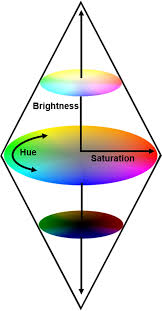
Qualia, the substrate of mental states, are the internal, experiential component of the senses. A typical human qualia consists of bound multiple bound sensory fields, often with accompanying emotional valence. The smallest possible qualia is known as a quale, the isolated phenomena that make up perception, such as the felt experience of the hue red or the note B♭. Color space is thought to be composed of 3 mutually orthogonal dimensions (2 linear dimensions of saturation and lightness, one circular dimension of hue); a minimal auditory space also has 3 dimensions (2 linear dimensions of pitch-height and volume, one circular dimension of pitch-chroma), with debate over timbre. Olfactory space is considerably more complex, with ever more mutually orthogonal qualitative dimensions identifiable as we explore our emotional capacity.
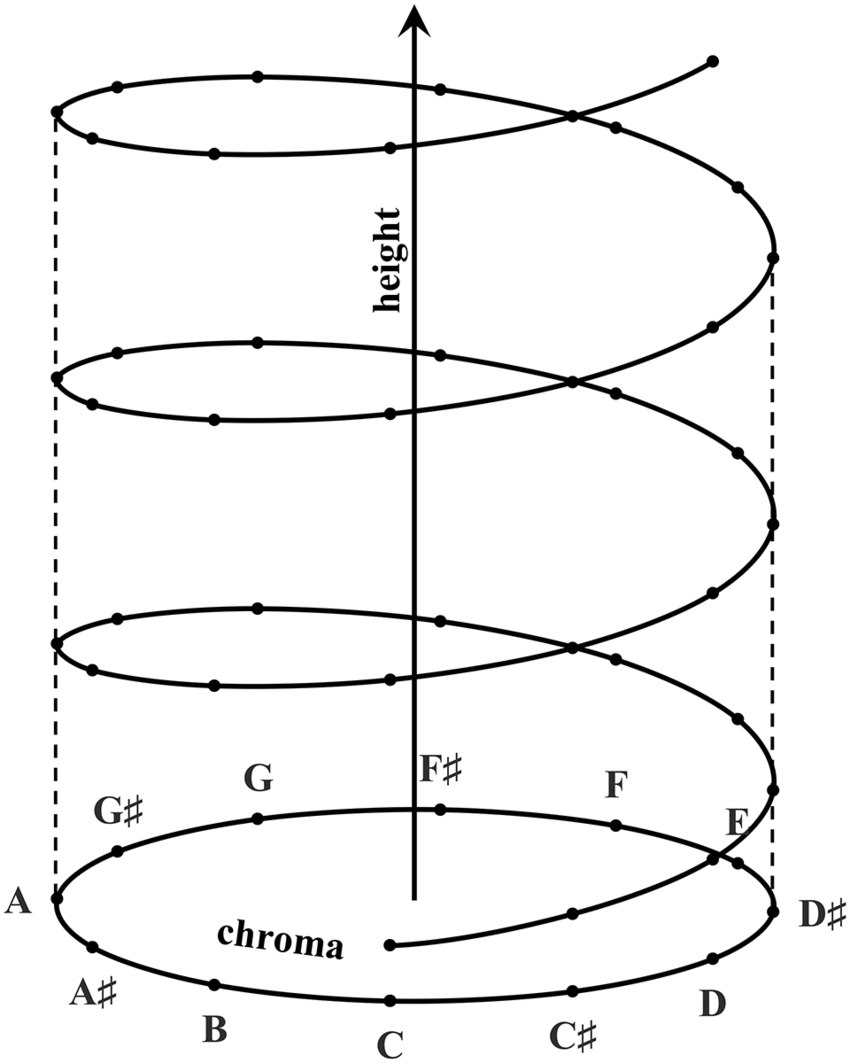
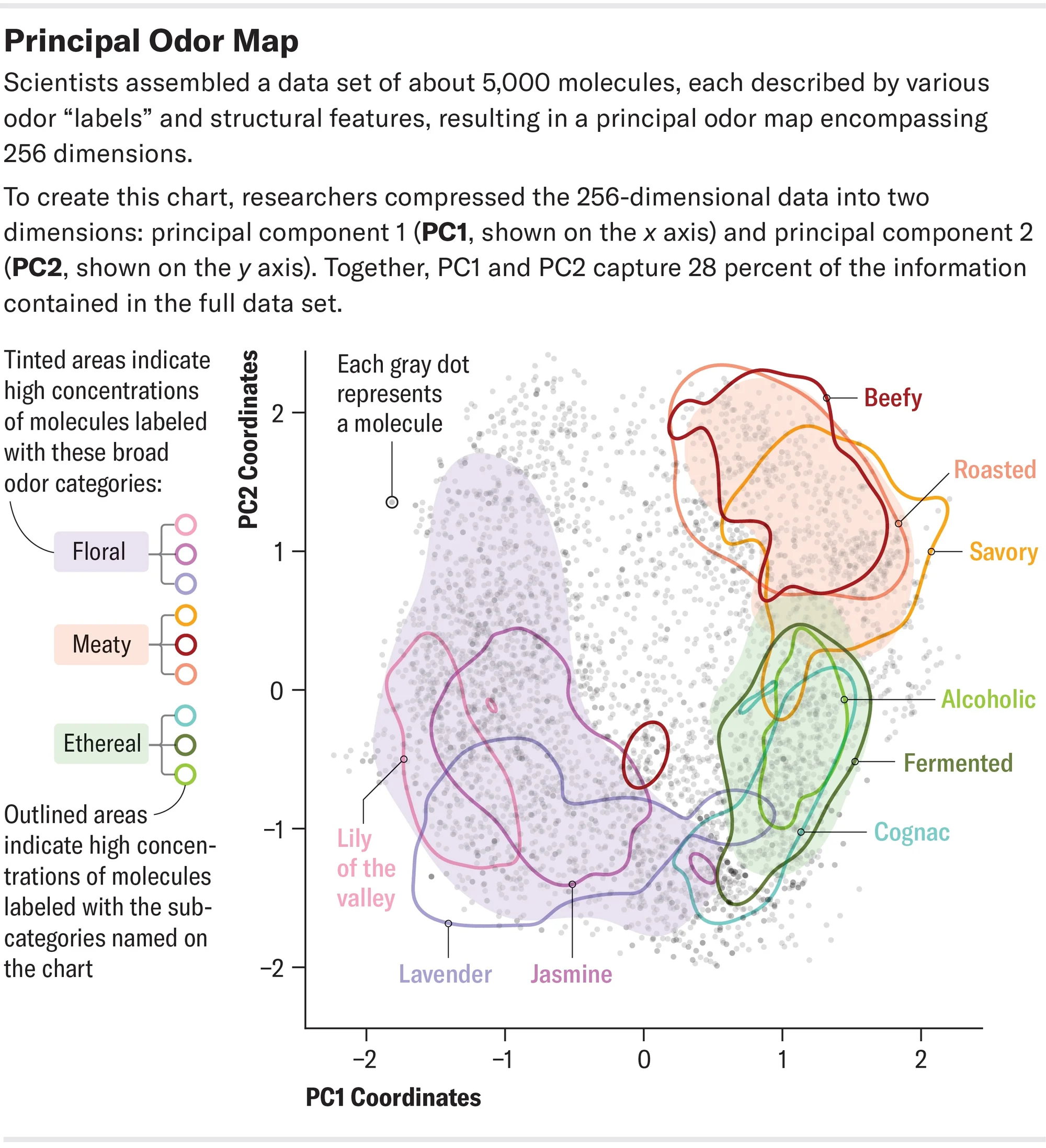
As sentient qualia are the only aspects of the universe that we have direct experience of, with all other knowledge coming from analysis of qualia, we can be certain they exist as fundamental constituents of reality. The sentient human experience, when taken across all the senses, composes an ontic fabric of unknown dimensionality.
Examples
- Bell, J. S. (1972). The theory of local beables. CERN
- Bell, J. S. (1984). Beables for Quantum Field Theory. CERN
- Brownstein, A. (2025). On the distinction between beables and qualia. arxiv.org/abs/2502.07705
When individual quale are bound into qualia one experiences them simultaneously, as reported by many Homo sapiens and termed as the binding problem of conscious experience. Due to spatial separation between brain regions processing different sensory pathways, a distinct theoretical tension arises when the presentation of bound quales are considered in light of Einstein’s relativity, as simultaneous events in one frame of reference are not simultaneous in others. This relativistic tension is the same as that found between quantum mechanically entangled particles, which also use simultaneously evolving non-local parameters in their description. Entanglement is understood to bind component parts into an inseparable composite state, as is seen within qualia.
Examples
- Bell, J. S. (1964). On the Einstein-Podolsky-Rosen Paradox. Physics, 1(3), 195–200. doi.org/10.1103/PhysicsPhysiqueFizika.1.195
- Georgiev, D. D. (2020). Quantum information theoretic approach to the mind–brain problem. Progress in Biophysics and Molecular Biology, 158, 16–32. doi.org/10.1016/j.pbiomolbio.2020.08.002
When attempting to share the experience of a qualia (such as describing the sensory impression of an apple) it is only possible to communicate a limited description of the state through classical mechanisms (such as language). Any such description may only convey the circumstances under which the sensations occurred, without directly communicating the phenomenal aspect of the qualia associated with those sensations. Quantum information is similarly bounded in the amount of information retrievable from any state. Holevo’s theorem has established a maximum extractable limit of N classical bits of information from a system of N qubits — previously requiring ~2N+1 real numbers to describe the entangled state. The vast majority of both internal qualitative experience and quantum information is inaccessible to the outside world.
Examples
- Georgiev, D. D. (2020). Inner privacy of conscious experiences and quantum information. BioSystems, 187. doi.org/10.1016/j.biosystems.2019.104051
Close associations between sensory organs and the generation of qualia suggest that sentient experiences pervade far beyond humans. Many neuron-rich animals across the mammals, reptiles, and mollusks integrate multiple senses to make complex decisions using evolutionarily related sensory organs. Sensory systems in humans further conserve their architecture from our single cell ancestors; these protozoa sense optical, chemical, and mechanical signals, and integrate this sensory information to hunt, hide, and find mates. From protozoa to humans, the same anesthetic compounds inhibit sensory response while leaving autonomic reflexes alone. The only shared cellular target across these species is the microtubule cytoskeleton, where anesthetics are known to bind in hydrophobic pockets and disrupt quantum coherent pi-electron resonances.
With the dissolution of conscious response in animals occurring through the disruption of quantum entanglement within the cell, it is proposed that the detail within a sentient experience is limited by the quantum information content of the entangled matter that sustains it.
Examples
- Kelz, M. B., & Mashour, G. A. (2019). The Biology of General Anesthesia from Paramecium to Primate. Current Biology, 29(22), 1199–1210. doi.org/10.1016/j.cub.2019.09.071
- Emerson, D. J., Weiser, B. P., Psonis, J., Liao, Z., Taratula, O., Fiamengo, A., Wang, X., Sugasawa, K., Smith, A. B., Eckenhoff, R. G., & Dmochowski, I. J. (2013). Direct modulation of microtubule stability contributes to anthracene general anesthesia. Journal of the American Chemical Society, 135(14), 5389–5398. doi.org/10.1021/ja311171u
Correlations between the properties of qualia and quantum information have thus motivated their use as the ontic substrate required for the Schrödinger wavefunction. Such explanations further avoid the emergence problem of consciousness by attributing elementary sentient experience to all matter, as was described by Schrödinger.
It is my suggestion that the non-local beables associated with quantum qualia fabrics are contained within the non-local parameters of the pilot wave; sentient waves may thus guide particles along dynamical paths.
Examples
- Schrödinger, E. (1956). Mind and matter. The Tarner Lectures.
- Neven, H., Zalcman, A., Read, P., S. Kosik, K., van der Molen, T., Bouwmeester, D., Bodnia, E., Turin, L., & Koch, C. (2024). Testing the conjecture that quantum processes create conscious experience. Entropy, 26(6). doi.org/10.1093/oso/9780198805397.003.0002